

Emily is a co-founder of Burst, writes about moringa nutrition, sourcing and supplement quality, drawing on research into plant-based wellness and everyday nutrition.
Research suggests a daily dose of 3–7g of leaf powder (or 500–1,000mg in capsules) is most effective, taken consistently. Most women notice improved energy within 1–2 weeks, with deeper benefits building over 2–3 months.
Moringa can be used alongside HRT as nutritional support, but isn't a substitute for it — anyone on medication for blood pressure, thyroid or diabetes, or with kidney stones or an autoimmune condition, should check with a healthcare provider first.
Menopause is a natural life stage, but for many women it comes with real challenges. Hormonal shifts can affect energy, sleep, mood, metabolism, joints and bone health. Symptoms like hot flashes, fatigue, brain fog and low mood can last for several years — and many women are looking for natural ways to feel more in control through this transition.
Moringa has gained attention as one of the world's most nutrient-dense plants — and moringa for menopause support makes particular sense. Its natural combination of iron, B vitamins, calcium and antioxidants aligns closely with the systems most disrupted by hormonal change.
This guide explores whether moringa supplements for menopause are worth considering, what the science says, and how to use it safely alongside your existing routine.
What is moringa?
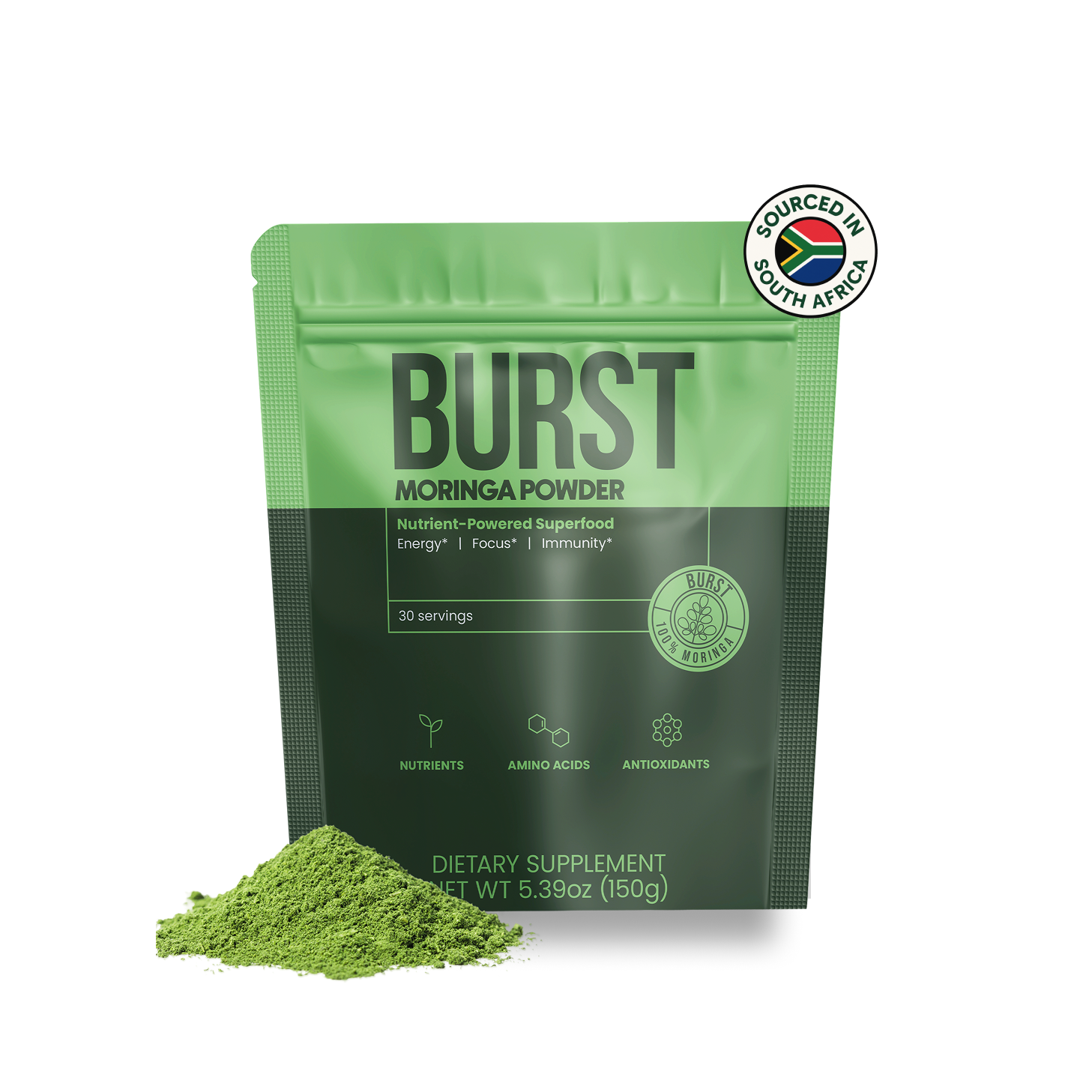
Moringa oleifera is a fast-growing tree traditionally used across Africa and Asia for its nutritional value. The leaves are especially rich in essential nutrients and bioactive compounds that support whole-body health. It's the same plant behind Burst Moringa Powder — gently processed to keep every nutrient intact.
What moringa naturally contains:
- Antioxidants such as quercetin and chlorogenic acid — shown to reduce oxidative stress and inflammation
- Vitamins A, C, E and K — essential for immune health, skin and bone support
- Minerals including calcium, magnesium, iron and potassium — all of which become more important after menopause
- Phytonutrients that support cellular and metabolic health
This combination makes moringa particularly relevant during midlife, when nutrient demands increase and protective hormones decline. If you're wondering how long moringa takes to work, most people notice subtle shifts within the first one to two weeks — with deeper changes building over two to three months.
What changes during menopause?
Menopause typically occurs between the ages of 45 and 55 and is defined by a decline in estrogen and progesterone. Estrogen affects far more than reproduction — it plays a role in bone density, cardiovascular health, brain function, inflammation control and metabolism.
As levels fall, women commonly experience:
- Hot flashes and night sweats
- Fatigue and disrupted sleep
- Mood changes, anxiety or low mood
- Joint stiffness and inflammation
- Weight gain, especially around the abdomen
- Bone density loss
- Brain fog and reduced focus
"Because menopausal symptoms are interconnected, broad nutritional support tends to work better than targeting a single symptom in isolation."
Moringa during perimenopause
Many women start noticing symptoms years before their last period. This transition phase — perimenopause — can begin in the early 40s and involves the same hormonal fluctuations that drive full menopause symptoms: disrupted sleep, mood changes, irregular cycles and energy dips.
The nutritional support moringa provides is equally relevant during perimenopause. Iron and B vitamins support energy during a time when fatigue often starts to build. Calcium and magnesium support bone density before the sharper decline that follows menopause. Antioxidants help manage the increasing oxidative stress that accompanies hormonal change.
If you're in your early-to-mid 40s and recognising these patterns, moringa supplements during perimenopause can be a practical and proactive step — not a treatment, but meaningful nutritional support at a time when your body needs it most.
Potential benefits of moringa for menopause
So does moringa help with menopause symptoms? Research suggests it may — not by replacing hormones, but by supporting the underlying systems most affected when they decline. Here's where the evidence points.
1. Reducing inflammation
Estrogen has natural anti-inflammatory effects. As it declines, inflammation often rises. Moringa contains compounds — including quercetin and chlorogenic acid — shown to reduce oxidative stress and inflammatory markers. This may help with joint discomfort, general aches and overall physical comfort. The same properties are why moringa is used to support joint pain and arthritis management.
2. Supporting energy levels
Fatigue is one of the most common menopausal complaints. Moringa provides iron to support oxygen delivery and B vitamins that help convert food into usable energy. When your body gets the nutrients it needs, energy comes more naturally — without relying on stimulants. If you're taking moringa every day, sustained energy is often one of the first improvements people notice — and it ties in well with staying active through midlife.
3. Indirect hormonal support
Moringa does not replace hormones, but it supports the systems affected by hormonal change. Antioxidants help protect tissues from increased oxidative stress, while minerals support endocrine and metabolic processes. This is why moringa features consistently across guides on moringa's benefits for women at different life stages.
4. Bone health support
Bone loss accelerates after menopause due to reduced estrogen. Moringa supplies calcium, vitamin K and magnesium — all essential for bone structure and mineral balance. Bone loss accelerates after menopause due to reduced estrogen. Moringa supplies calcium, vitamin K and magnesium — all essential for bone structure and mineral balance. While direct clinical trials on moringa's effect on bone density specifically in postmenopausal women are still limited, these nutrients are consistently recommended for bone health support in this demographic, making moringa a practical dietary contributor to an overall bone-supportive routine.
5. Mood and cognitive health
Mood swings, anxiety and brain fog are common during menopause. B vitamins in moringa support nervous system function and neurotransmitter production. Research also suggests moringa's antioxidants may help protect brain cells from oxidative stress — supporting mental clarity and emotional balance over time.
6. Blood sugar stability
Hormonal shifts can impact insulin sensitivity. Early research suggests moringa may support healthy blood sugar levels — an area explored in our guide on moringa and blood sugar. Keeping blood sugar stable helps prevent the energy crashes and mood fluctuations that often worsen during menopause.
7. Skin and hair through the change
Declining estrogen affects collagen production and scalp health. Moringa's zinc, vitamin A and amino acids support both — covered in more depth in our articles on moringa for skin and moringa for hair growth.
What does the research say?
Human research on moringa and menopause is still developing, but a growing body of evidence points in a consistent direction. Here's a summary of the key findings relevant to women going through hormonal change.
Antioxidant status and haemoglobin
A notable study in postmenopausal women found that daily moringa leaf supplementation over three months significantly improved antioxidant status and haemoglobin levels. Both are directly relevant to menopause — oxidative stress rises sharply as estrogen declines, and low haemoglobin is a common driver of the fatigue many women experience during this transition.
Inflammation and metabolic markers
Studies suggest moringa's plant compounds — particularly quercetin and chlorogenic acid — may help reduce inflammatory markers and support metabolic health. A review published in Phytotherapy Research identified moringa as having meaningful anti-inflammatory and antioxidant activity, with potential relevance for the chronic low-grade inflammation that commonly increases after menopause.
Blood sugar regulation
Research published in the Journal of Diabetes found that moringa leaf extract helped reduce fasting blood glucose levels in clinical populations. Since menopause can impair insulin sensitivity, this is particularly relevant for women managing energy fluctuations and weight changes during the transition.
Bone mineral support
Moringa's calcium, magnesium and vitamin K content is well established. While direct clinical trials on moringa and bone density in menopausal women are limited, the individual nutrients it provides are consistently recommended for bone health support in this demographic — making it a practical dietary contributor to an overall bone-protective routine.
The honest picture: Research on moringa supplements for menopause is promising but still emerging. The evidence is strongest for antioxidant support, energy and inflammation management. Moringa is not a hormonal treatment — but its nutritional profile directly addresses several of the systems most affected by hormonal change.
How to use moringa for menopause
Moringa comes in two main forms — powder and capsules. Not sure which suits you? Our powder vs capsules guide breaks down the differences in taste, convenience and cost.
Most research uses a daily moringa dosage of 3–7g of leaf powder — roughly half a teaspoon to one full teaspoon. For capsules, a typical starting moringa dose is 500–1,000mg once or twice daily. Start at the lower end and build up as your body adjusts. Consistency matters more than quantity.
| Format | Daily moringa dosage | Best for |
|---|---|---|
| Powder | ½ tsp → 1–2 tsp (3–7g) | Smoothies, yogurt, soups, warm drinks |
| Capsules | 500–1,000mg daily | Convenience, consistent dosing — ideal for busy schedules |
| Tea | 1–2 cups daily | Hydration, relaxation, gentle intake |
When to expect results
| Timeline | What you may notice |
|---|---|
| 1–2 weeks | Improved energy and vitality — often the first shift people feel |
| 3–4 weeks | Better mood balance, physical comfort and more consistent sleep |
| 2–3 months | Broader benefits tied to inflammation, metabolic support and bone health |
Safety and considerations
Moringa leaf is generally well tolerated. Mild digestive discomfort can occur if starting with large doses — starting at half a teaspoon and building up gradually helps. Avoid moringa root and bark — only the leaf is recommended. For a full picture of daily use and tolerability, see what happens if you take moringa every day.
Moringa is not an alternative to hormone replacement therapy. Many women use it alongside HRT or other prescribed treatments as nutritional support — but it should complement medical care, not replace it. If you're considering changes to your menopause management, speak to your healthcare provider first.
⚠ Speak with a healthcare professional if you: Take blood pressure, thyroid or diabetes medications · Have kidney stones · Have an autoimmune condition · Are using hormone replacement therapy. Moringa complements medical care but should not replace prescribed treatments.
Final thoughts
Moringa supplements for menopause won't reverse hormonal change — but they give your body more of what it needs to navigate it well. The combination of antioxidants, B vitamins, calcium and iron supports energy, inflammation balance, bone health and cognitive function during a time when nutrient demands are genuinely higher.
Used consistently, moringa may help women feel more supported, resilient and energised through the transition — whether that's during perimenopause, menopause itself, or beyond. It's part of a wider picture of moringa's benefits for women across all life stages — from pregnancy and postnatal recovery, to managing weight through hormonal change.
Plant-powered support for midlife — Burst Moringa
Premium powder & capsules. Harvested from nutrient-rich Southern African soil. Third-party tested.
Shop Now →
Common questions
Does moringa help with menopause symptoms?
Research suggests moringa may help support several systems disrupted by menopause — including energy, inflammation, mood and bone health. It's not a hormonal treatment, but its natural iron, B vitamins, calcium and antioxidant content directly supports the areas most affected by declining estrogen. Most women who notice a difference report improved energy first, with broader benefits building over two to three months of consistent daily use.
Is moringa good for menopause?
Yes — moringa is well suited to the nutritional needs of menopause. Its combination of antioxidants, calcium, magnesium, iron and B vitamins supports the specific systems most disrupted by hormonal change: energy metabolism, bone density, inflammation management and mood. It's not a cure for menopause, but as part of a consistent daily routine, moringa supplements for menopause can be a meaningful form of nutritional support.
What is the recommended moringa dosage for menopause?
Most research uses a daily moringa dosage of 3–7g of leaf powder — roughly half a teaspoon to one full teaspoon. For capsules, 500–1,000mg once or twice daily is a typical starting point. Start at the lower end and build up gradually. Consistency at a moderate daily dose produces better results than larger, irregular amounts.
Can I take moringa alongside HRT?
Many women use moringa alongside hormone replacement therapy as nutritional support. Moringa is not a hormonal supplement and does not interact with HRT directly, but if you're taking prescribed medications — including HRT, blood pressure or thyroid medication — it's always worth checking with your healthcare provider before adding any new supplement to your routine.
How long does moringa take to work for menopause symptoms?
Energy is usually one of the first things women notice — often within one to two weeks of consistent daily use. Mood balance and physical comfort typically improve over three to four weeks. Deeper benefits — inflammation support, bone health, metabolic balance — build over two to three months. Consistency is the key variable. See our full guide on how long moringa takes to work for the complete timeline by benefit.