

Emily is a co-founder of Burst, writes about moringa nutrition, sourcing and supplement quality, drawing on research into plant-based wellness and everyday nutrition.
Taken internally (powder or capsules), it addresses nutritional deficiencies that contribute to thinning; applied topically, moringa oil conditions the scalp directly and has shown promising hair growth-supporting effects in animal research. Human clinical evidence is still limited.
Most people notice texture improvements within 4–6 weeks, with reduced shedding by 2–3 months and visible density changes by 4–6 months of consistent use.
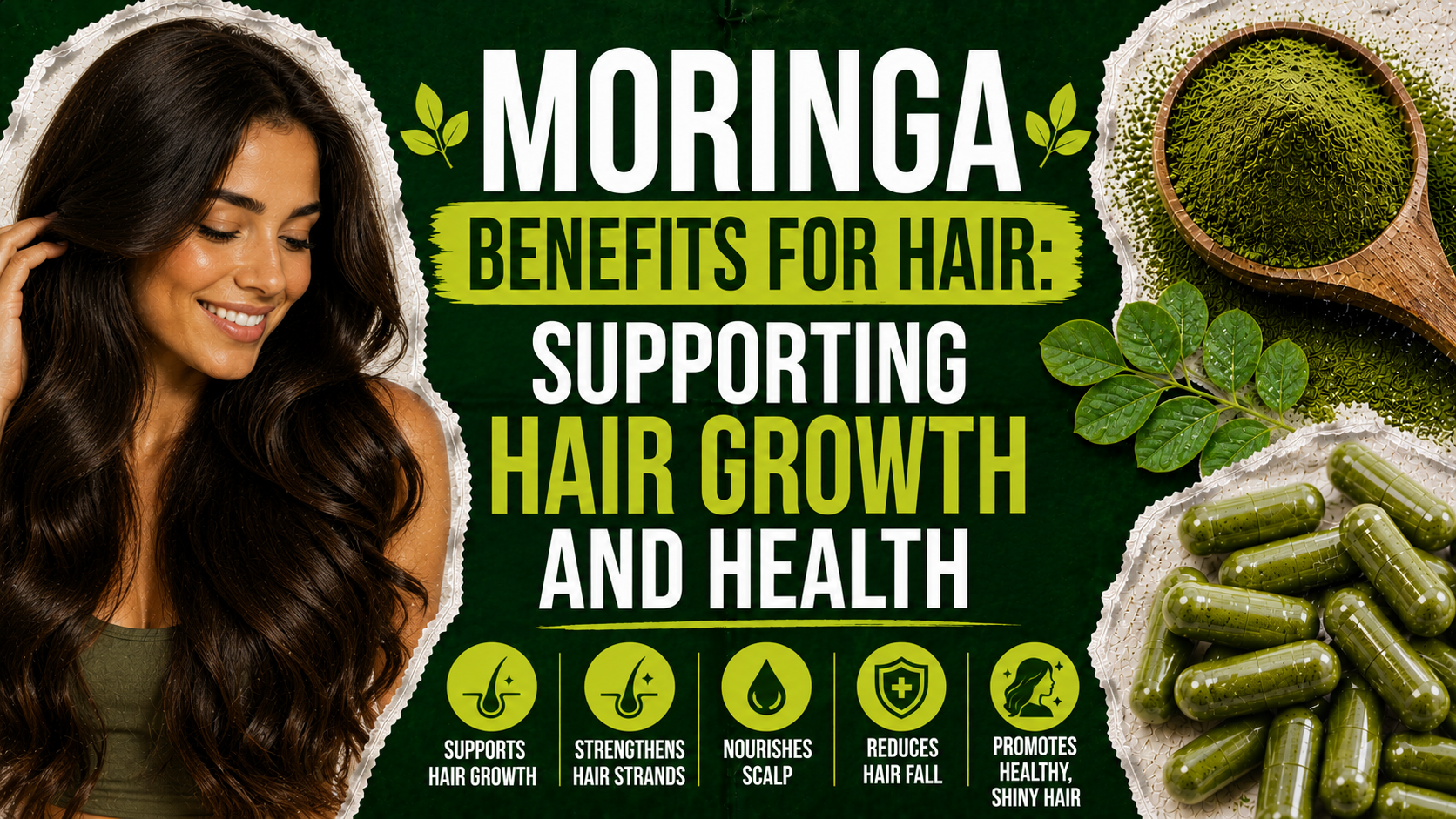
Moringa is one of the most nutrient-dense plants on the planet. Packed with vitamins, minerals, antioxidants and amino acids, it has been used for generations to support overall health. In recent years it has gained real attention for its ability to support hair health — from strengthening follicles and preventing shedding to stimulating growth and improving scalp condition.
The short version: Moringa addresses hair health from multiple angles simultaneously — follicle nutrition, scalp circulation, oxidative stress, inflammation and keratin production. That breadth is what sets it apart from single-nutrient supplements.
Why Hair Health Matters
Healthy hair is more than appearance — it reflects your overall nutrition, immune system and lifestyle habits. Hair is made primarily of a protein called keratin, and maintaining strong hair requires proper nutrition, healthy circulation and protection against oxidative stress. Deficiencies in vitamins, minerals or amino acids can lead to thinning, hair loss and dullness. Moringa provides many of these essential nutrients together, making it a powerful ally in any hair care routine.
Key Nutrients in Moringa for Hair
What moringa provides for hair:
- Vitamin E — natural antioxidant that reduces oxidative stress in hair follicles and promotes healthy scalp circulation
- Zinc — supports hair growth and tissue repair, preventing shedding and breakage
- Iron — essential for oxygen delivery to hair follicles, reducing thinning and promoting strength
- Amino acids — building blocks for keratin, supporting hair structure and resilience
- Vitamins A & C — promote sebum production and collagen synthesis for a healthy scalp and strong hair
- Antioxidants (quercetin, chlorogenic acid) — reduce inflammation and oxidative damage to hair follicles
This is the same nutrient profile that makes moringa effective for skin health — both skin and hair rely on the same underlying systems: collagen production, antioxidant protection and anti-inflammatory activity.
How Moringa Supports Hair Growth
Consistent use of moringa — as powder, supplement or oil — addresses multiple factors involved in hair health simultaneously:
Strengthens Hair Follicles
Nutrients in moringa nourish follicles from within, supporting hair density and resilience. Iron and B vitamins improve oxygen delivery and cellular energy to follicle cells, while zinc directly supports the tissue repair processes that keep follicles functioning. These are the same energy and oxygen mechanisms behind moringa's benefits for daily vitality.
Reduces Hair Loss
Antioxidants and anti-inflammatory compounds protect follicles from oxidative damage — one of the leading causes of premature shedding. By reducing inflammation at the scalp level, moringa minimises the follicle damage that leads to thinning over time.
Improves Hair Texture
Moringa supports collagen formation through its vitamin C content, enhancing elasticity, shine and thickness. Users commonly report improved manageability and reduced brittleness with consistent use.
Supports Scalp Health
Vitamin E and fatty acids in moringa keep the scalp moisturised and healthy, reducing dryness, flaking and the conditions that can impair growth. A healthy scalp is the foundation for healthy hair.
Promotes Hair Growth
Amino acids and minerals strengthen keratin production — the protein that makes up 90% of each hair strand — encouraging longer, thicker, more resilient growth with consistent daily use.
"Hair growth is a slow process that reflects the cumulative effect of daily nutrition. Moringa works by consistently supplying the building blocks that follicles need — not by forcing growth, but by removing the barriers to it."
Moringa for Hair Loss
Hair loss can result from stress, hormonal imbalance, poor nutrition or scalp conditions. Moringa helps by:
- Reducing inflammation that can damage follicles and disrupt the hair growth cycle
- Delivering essential nutrients to combat the deficiencies — particularly iron and zinc — that frequently cause thinning hair
- Supporting hormonal balance, which significantly affects hair growth patterns in both men and women
Although human clinical trials are limited, animal research on topical moringa seed oil found it upregulated VEGF (a gene involved in follicle blood supply) and downregulated 5α-reductase — the enzyme responsible for converting testosterone into DHT, the hormone most associated with pattern hair loss — with effects described as comparable to minoxidil in that animal model. This is specifically evidence for topical seed oil rather than oral leaf powder or capsules, though the broader mechanisms — anti-inflammatory activity, improved follicle nutrition and antioxidant protection — support both forms of use in different ways.
Forms of Moringa for Hair
There are two complementary ways to incorporate moringa into your hair care routine — internal and topical. Both methods work differently and can be combined for maximum effect.
| Method | How it works | Best for |
|---|---|---|
| Powder or Capsules | Delivers nutrients systemically — nourishes follicles from within via the bloodstream | Overall hair health, follicle strength, reducing hair loss from nutritional deficiency |
| Moringa oil (topical) | Applied directly to scalp — nourishes follicles locally, moisturises the scalp and reduces dryness and breakage | Scalp health, dryness, topical conditioning, shine and texture |
Both methods complement each other for overall hair wellness. Internal supplementation addresses the systemic nutritional foundations; topical oil addresses local scalp conditions. Not sure which supplement format to start with? Our powder vs capsules guide has you covered.
How to Use Moringa for Hair Growth
| Method | How to use | Frequency |
|---|---|---|
| Internal — Powder | 1 tsp daily in smoothies, lattes or water | Daily |
| Internal — Capsules | Follow product instructions with water | Daily |
| Topical — Moringa oil | Massage a few drops into scalp, leave 30 min or overnight, then wash as usual | 2–3× per week |
⚠ Consistency is key: Nutrients from moringa work gradually to strengthen follicles and improve hair growth. Give it at least 2–3 months of consistent daily use before evaluating results — hair growth is one of the slower-responding benefits. For a full breakdown of expected timelines, see how long moringa takes to work.
How Long Does It Take to See Results?
| Timeline | What you may notice |
|---|---|
| 4–6 weeks | Improved hair texture, reduced dryness and stronger strands |
| 2–3 months | Reduced hair fall and increased scalp health |
| 4–6 months | Noticeable hair growth and improved density |
Results vary based on individual health, nutrition and genetics. Moringa works best as part of a broader wellness routine — the same consistent daily habits that support energy, skin and immunity also create the conditions for healthy hair growth.
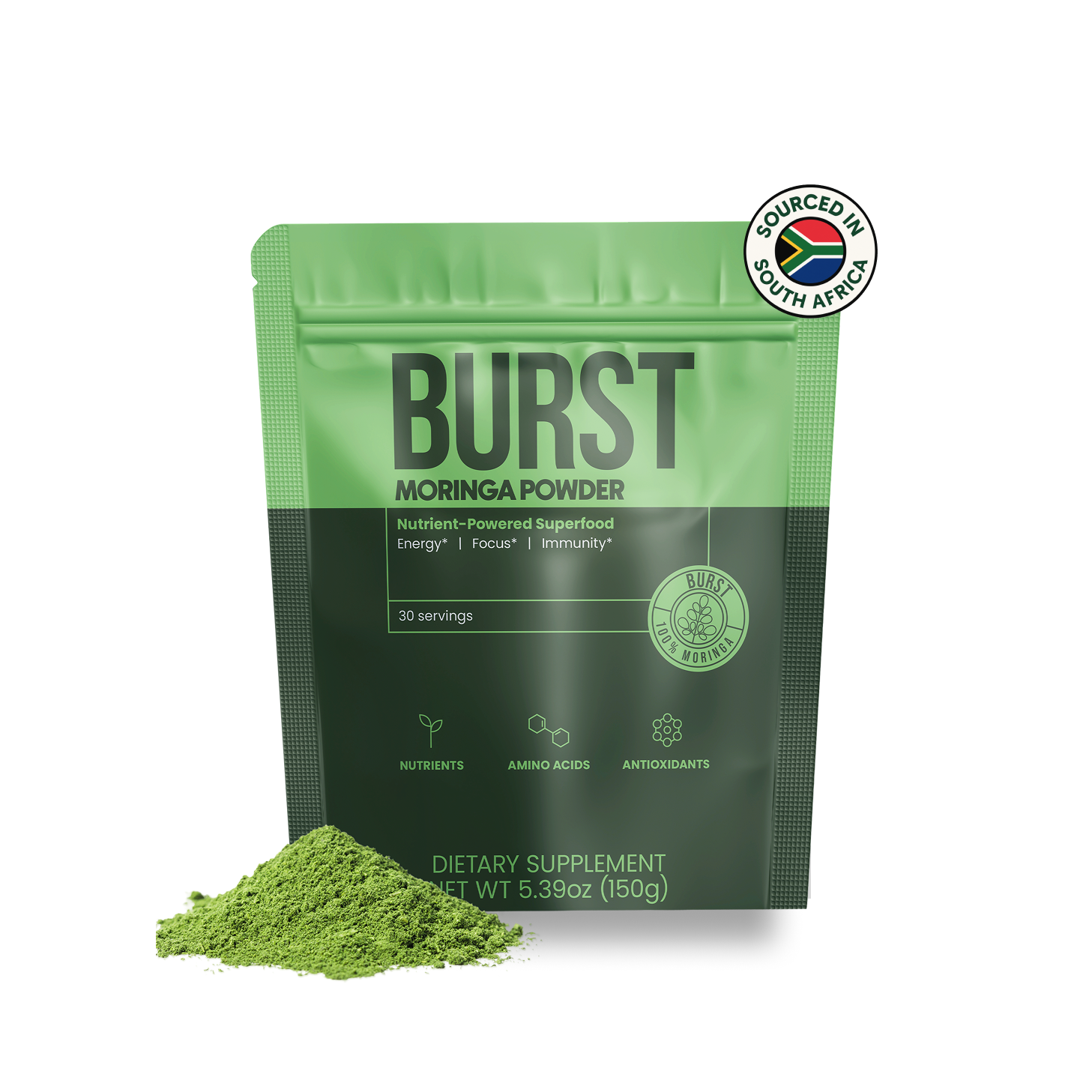
Nourish Hair From Within — Burst Moringa, Third-Party Tested
Premium powder & capsules. Clinically relevant doses of pure moringa leaf — grown in nutrient-rich Southern African soil.
Shop Now →
Frequently Asked Questions
Does moringa make your hair grow?
Yes — regular use of moringa provides essential nutrients that strengthen follicles and create the conditions for healthy hair growth. Zinc, iron, amino acids and antioxidants all contribute. Results build gradually over 2–6 months of consistent use, reflecting the natural pace of the hair growth cycle.
How do you use moringa for hair growth?
For best results, take moringa internally as a daily supplement — 1 tsp of powder in smoothies or water, or capsules with meals — and apply moringa oil topically to the scalp 2–3 times per week. The internal approach nourishes follicles systemically; the topical approach conditions the scalp directly.
Is moringa oil better than moringa powder for hair?
Both are beneficial — they work in different ways. Moringa powder nourishes hair from within, addressing nutritional deficiencies that cause thinning and shedding. Moringa oil hydrates and strengthens hair externally, improving scalp condition and texture. Using both together gives the most comprehensive results.
How long does it take for moringa to make your hair grow?
Improvements in texture and strength can often be noticed within the first 4–6 weeks. Meaningful reductions in hair fall typically appear at 2–3 months, and noticeable growth and density improvements develop between 4–6 months of consistent daily use. Patience and consistency are the most important factors.
Nourish Hair From Within
Wild-harvested, single-origin moringa — grown in nutrient-rich Southern African soil, free from fillers, and processed for maximum absorption.