

Emily is a co-founder of Burst, writes about moringa nutrition, sourcing and supplement quality, drawing on research into plant-based wellness and everyday nutrition.
Because moringa is naturally high in both iron and vitamin A, parents should watch total intake from all sources, not just moringa.
Always consult your child's paediatrician before introducing moringa, especially if your child has an existing health condition or takes medication.
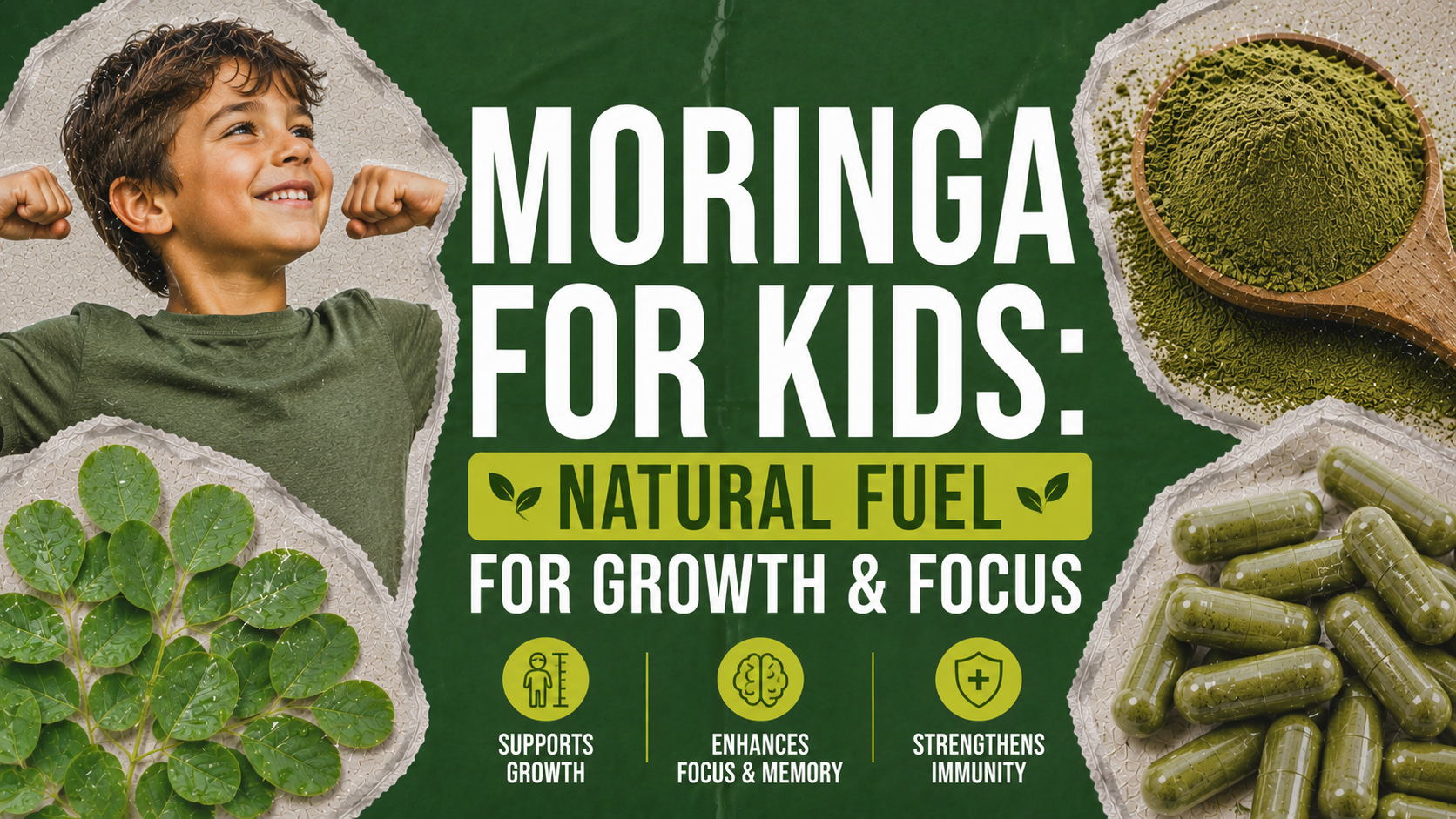
Moringa is one of the most nutrient-dense plants on the planet. While widely celebrated for adult wellness, moringa is also incredibly beneficial for children — supporting growth, brain development, immune health and overall vitality. This guide covers everything parents need to know about introducing moringa safely and effectively.
⚠ Always consult your paediatrician: Before introducing any new supplement to a child's diet — including moringa — consult your paediatrician, especially if your child is on medication or has an existing health condition. Start with small amounts and introduce gradually.
What Is Moringa Powder?
Moringa powder is made from the dried leaves of the Moringa oleifera tree, native to South Asia and cultivated across tropical regions. Rich in vitamins A, C, D, E and K, minerals including calcium, iron and potassium, essential amino acids and powerful antioxidants, it provides a natural source of complete nutrition. Its density of nutrients in a small serving makes it particularly practical for supporting children's varied nutritional needs.
Nutritional Support: Helping Kids Grow Strong
Children require a steady supply of vitamins and minerals for proper growth. Moringa powder provides many of the key nutrients that are hardest to obtain consistently from diet alone:
- Vitamin A — supports healthy vision, cell growth and immune function
- Vitamins C & E — promote immune health and antioxidant protection
- Calcium & Vitamin D — strengthen developing bones and teeth
- Iron & Zinc — crucial for cognitive development, energy production and immunity
- Complete protein — all nine essential amino acids for tissue growth and repair
Moringa leaves are widely recognized in nutrition research as an unusually concentrated source of vitamin A, calcium, vitamin C and protein relative to their weight — research has explored their use in child nutrition programs in regions facing malnutrition, including studies on moringa-based porridges designed to support healthy growth in young children. Exact nutrient comparisons vary between studies and growing conditions, but the underlying nutrient density is well documented.
Moringa vs Common Foods
Moringa outperforms many commonly consumed foods in key vitamins and minerals per gram, making it one of the most concentrated natural sources of nutrition available for growing children:
| Nutrient (per 100g) | Moringa Leaf Powder | Spinach | Kale | Milk |
|---|---|---|---|---|
| Vitamin A | 18,900 IU | 9,400 IU | 9,900 IU | 500 IU |
| Vitamin C | 220 mg | 28 mg | 120 mg | 2 mg |
| Calcium | 2,000 mg | 99 mg | 150 mg | 125 mg |
| Iron | 28 mg | 2.7 mg | 1.5 mg | 0.1 mg |
| Protein | 27 g | 2.9 g | 4.3 g | 3.4 g |
| Potassium | 1,300 mg | 560 mg | 491 mg | 150 mg |
"Moringa is one of the few plants that delivers complete protein, essential vitamins and minerals together — in a form that's easy to mix into foods children already enjoy."
7 Health Benefits of Moringa for Kids
1. Boosts Immunity
Moringa contains antioxidants including quercetin and chlorogenic acid, along with vitamin C, which strengthen the immune system and help protect children from common infections. Regular consumption supports a resilient immune response, keeping kids healthy and active through the school year.
2. Supports Brain Development
Iron, zinc and amino acids in moringa contribute to cognitive function, memory and focus — supporting learning and attention, especially for school-age children. These are the same nutrients that underpin moringa's benefits for mental clarity in adults, scaled appropriately for growing brains.
3. Promotes Healthy Digestion
The fibre in moringa supports gut health, prevents constipation and aids nutrient absorption — ensuring children get the full benefit from their diet. The same gut-supporting mechanisms are covered in our guide to moringa and natural detoxification.
4. Encourages Healthy Skin and Hair
Vitamins A and E, plus amino acids, maintain skin clarity, promote collagen formation and strengthen hair follicles — helping children feel comfortable and confident in their skin.
5. Supports Eye Health
Vitamin A in moringa is vital for vision development. Regular intake contributes to healthy eyesight and proper visual function in growing children — particularly relevant during the screen-heavy years of school life.
6. Increases Energy and Reduces Inflammation
Natural iron and B vitamins provide steady energy without caffeine or sugar spikes. Moringa's anti-inflammatory compounds also help maintain daily wellness, supporting recovery from the physical demands of childhood activity and sport.
7. Supports Metabolism and Healthy Weight
By balancing metabolism and providing nutrient-dense calories, moringa can support healthy weight gain in underweight children or help maintain balanced weight in those who are overweight — providing nutrition without empty calories.
Safe Dosage and Usage Guidelines for Children
Moringa is generally considered safe for children when used in moderation. Dosage depends on age and individual nutritional needs:
| Age Group | Recommended Amount | Notes |
|---|---|---|
| 1–3 years | ¼ to ½ tsp daily | Mix into soft foods like porridge or yogurt |
| 4–8 years | ½ to 1 tsp daily | Blend into smoothies or soups |
| 9–13 years | 1 to 1½ tsp daily | Can be added to juices or baked goods |
| 14+ years | 1½ to 2 tsp daily | Safe adult serving range |
⚠ Safety guidelines: Introduce moringa gradually and monitor for any digestive reactions · Avoid overuse to prevent excess iron intake · Consult a paediatrician before giving moringa to children on medication, especially for thyroid, blood-thinning or iron-regulating treatments · Only use pure moringa leaf powder — not root or bark products.
How to Incorporate Moringa for Kids
Moringa powder is versatile and easy to add to foods children already enjoy. The mild earthy flavour is easy to mask with sweet ingredients:
- Moringa smoothie — blend banana, berries, milk or yogurt and ½ tsp of moringa powder for a nutrient-packed drink
- Moringa porridge — stir a pinch into oatmeal or rice porridge for breakfast
- Moringa soup — add moringa powder to vegetable or chicken soup for extra vitamins and minerals
- Baked goods — stir into muffin or pancake batter for older children (9+)
Once daily is sufficient for most children. Consistency delivers the best results for energy, immunity and development. If a child finds the taste off-putting, sweeter smoothie bases — banana, mango, berries — mask it well.
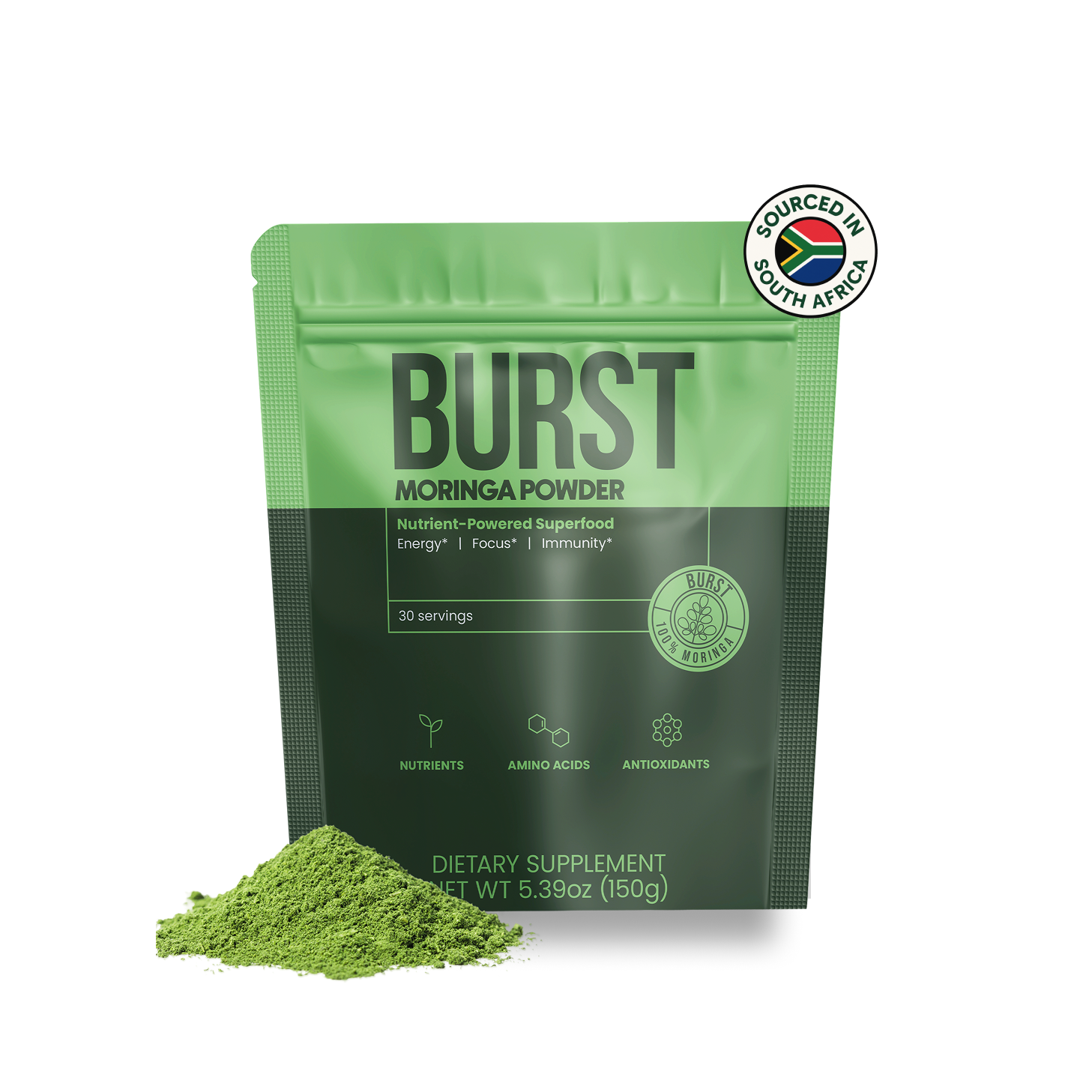
Pure Moringa for the Whole Family — Burst Moringa, Third-Party Tested
Wild-harvested pure leaf powder. No fillers, no additives. Clinically relevant doses from nutrient-rich Southern African soil.
Shop Now →
Frequently Asked Questions
Can I give moringa to toddlers?
Yes, moringa can be given in very small amounts (¼ teaspoon) mixed into soft foods like porridge or yogurt for children aged 1–3. Always introduce gradually and monitor tolerance. Consult your paediatrician if you have any concerns, especially if your toddler has dietary restrictions or health conditions.
What age is safe to start moringa?
Moringa can generally be introduced after 1 year old, once your child is eating solid foods. Starting at this age aligns with the same point at which most dietary supplements are considered appropriate for toddlers.
Does moringa taste bitter? How can I mask the flavour?
Moringa has a mild earthy taste rather than a strong bitterness. Mix it with sweet fruits, honey or milk in smoothies to make it more appealing for children. Banana and berry smoothies are particularly effective at masking the taste completely.
Can moringa replace a multivitamin?
Moringa provides many of the same nutrients as a multivitamin in a natural whole-food form. However, it should complement rather than replace a balanced diet, and is best used alongside varied eating habits rather than as a substitute for them.
How often should kids take moringa?
Once daily is sufficient for most children. Consistency delivers the best results for energy, immunity and development. See our guide on how long moringa takes to work for a realistic timeline of when to expect changes.
Can moringa help with picky eaters or nutritional gaps?
Moringa can be a useful way to add concentrated nutrition to meals a child already eats, which can help fill gaps for children with a limited diet. It shouldn't be used as a substitute for encouraging a varied diet over time, and a paediatrician or dietitian can help address ongoing picky eating more directly.
Pure Moringa for the Whole Family
Wild-harvested, single-origin moringa — grown in nutrient-rich Southern African soil, free from fillers, and processed for maximum absorption.