


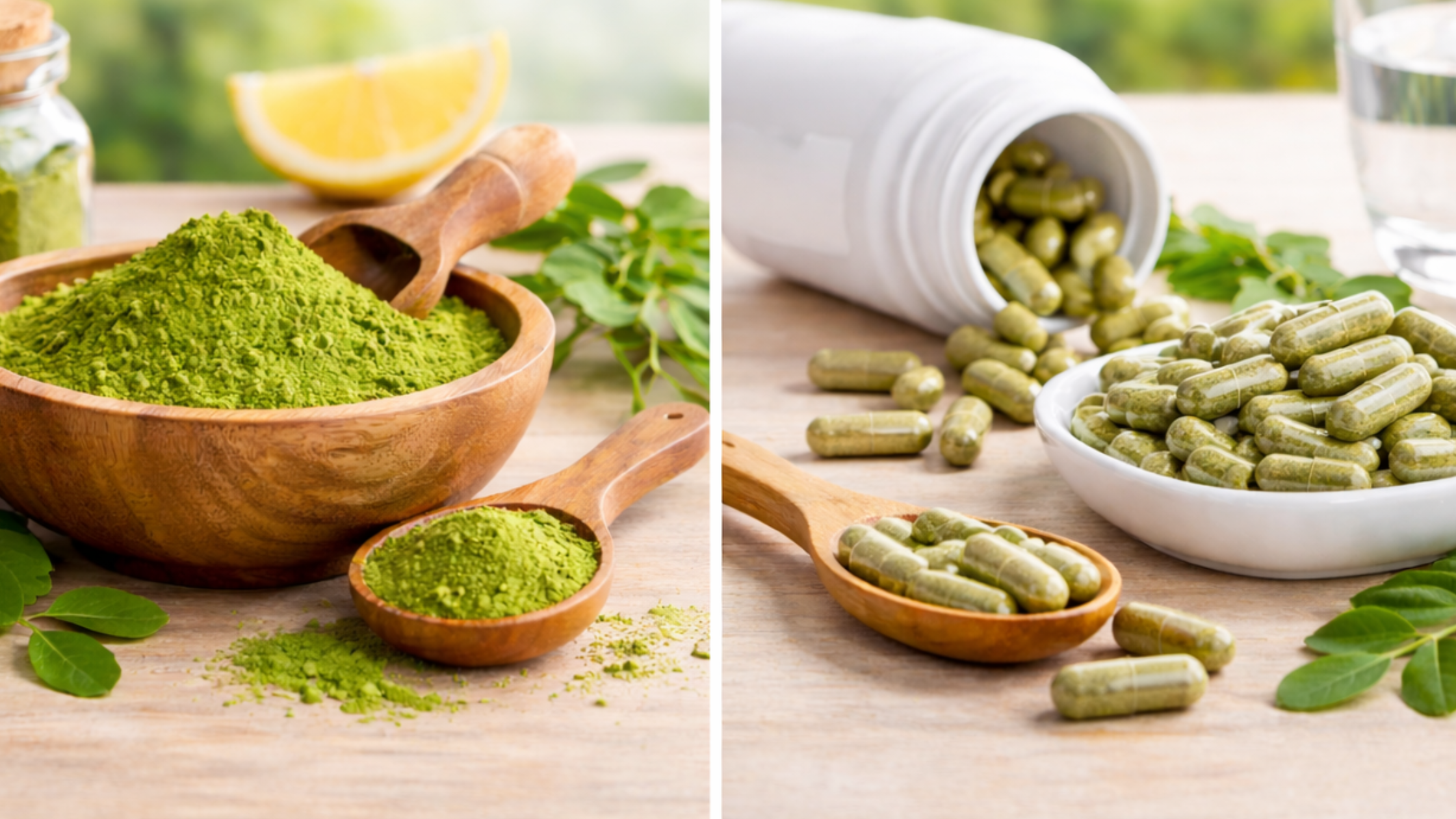
Moringa oleifera, often called the "miracle tree," has been used for centuries as both food and medicine. Today it's earned a place in modern wellness for one simple reason: it is incredibly nutrient dense. If you are considering moringa as a daily supplement, one question usually comes up first — should you take it as a powder or as capsules? Both deliver the same plant, but the experience is very different.
The short version: Neither form is better than the other — the right choice comes down entirely to your lifestyle, taste preferences and how you like to build habits.
Understanding Moringa
Moringa oleifera is a fast-growing tree native to South Asia and Africa. While many parts of the plant are edible, supplements almost always use the leaves because they contain the highest concentration of nutrients.
- Vitamins A, C and E, plus a full range of B vitamins
- Minerals including iron, calcium, magnesium and potassium
- All nine essential amino acids
- Polyphenols and flavonoids that protect cells from oxidative stress and inflammation
This combination is what makes moringa appealing as an all-around wellness supplement rather than something that targets just one area of health. You can read more about the full picture in our guide to what happens when you take moringa every day.
Powder vs Capsules: The Real Differences

Nutrient Absorption
Both powder and capsules contain the same moringa leaf. With powder, nutrients begin absorbing as soon as it is consumed. Capsules need to dissolve first, which can slow absorption slightly — though for most people this difference is minimal. When quality is high, both forms deliver very similar benefits.
Convenience
Powder works best for people who already prepare smoothies, teas or meals and don't mind measuring and mixing. Capsules are easier if you want something quick, clean and portable — no prep, no taste, no mess. If your schedule is busy or you travel often, capsules tend to be the simpler choice.
Taste
Moringa powder has a natural green, earthy flavour. Some people enjoy it blended into smoothies, while others find it hard to mask. Capsules remove taste from the equation entirely, which can make a big difference for long-term consistency.
Flexibility
Powder gives you full control over how much you take — you can start small and adjust gradually. Capsules offer precise dosing, which is helpful if you prefer structure or are following a specific routine.
Cost
In most cases, powder costs less per gram, especially when purchased in larger quantities. Capsules are usually more expensive due to encapsulation and packaging costs. For long-term daily use, powder is generally more economical.
Storage and Stability
Powder should be kept airtight and away from heat and light to preserve nutrients. Capsules are more stable and less sensitive to environmental exposure, which helps maintain potency over time — useful if you travel or keep supplements at work.
The best form of moringa is the one you'll actually take every day. Consistency matters far more than the delivery method.
Moringa Powder vs. Capsules - Full Comparison Table

| Factor | Moringa Powder | Moringa Capsules |
|---|---|---|
| Nutrient Absorption | Very fast (direct) | Slight delay (capsule dissolution) |
| Convenience | Needs prep, blending | Easy, no prep |
| Taste | Earthy, green | Tasteless |
| Flexibility | Highly flexible dose | Fixed dose, reliable |
| Cost Efficiency | Better for bulk, daily use | Higher per serving |
| Long-Term Stability | Sensitive to moisture/light | More stable sealed form |
| Best For | Recipe users, long-term wellness | Travel, consistency, precise dose |
| Side Effect Risk | Low–moderate (depends on dose) | Low–moderate, more controlled |
Which One Is Right for You?

Powder tends to work best if you:
- Enjoy smoothies, cooking or food prep
- Want dose flexibility and control
- Are focused on long-term value and economy
- Already have a morning routine you can add it to
Capsules are usually better if you:
- Want something quick and portable
- Dislike strong or earthy flavours
- Travel frequently or have an unpredictable schedule
- Prefer a consistent, measured dose without extra effort
Neither form is inherently better. Both deliver the same nutrient-dense moringa leaf. The best option is simply the one you will use consistently — because as with any supplement, the benefits build over time with regular use.
Moringa's benefits span a wide range of health goals. Whether you're interested in women's wellness, men's health, blood sugar support or just general daily energy, both forms get you there.
How to Use Moringa
| Format | Starting Dose | How to Use |
|---|---|---|
| Powder | ½ tsp, build to 3–5g daily | Smoothies, yogurt, oatmeal, warm drinks. Store airtight away from heat. |
| Capsules | Follow label instructions | Take with water at a consistent time each day. |
In both cases, consistency matters more than timing. Most people notice subtle benefits within the first week, with more noticeable changes developing over several weeks of regular use. See our full timeline guide for what to expect.
Safety and Side Notes
Moringa is generally well tolerated at common supplement doses. Some people experience mild digestive changes when starting — these usually pass as the body adjusts.
Because moringa is naturally high in iron, those with iron-related conditions or people on medication for blood sugar or blood pressure should consult a healthcare provider before supplementing regularly. Product quality matters — look for moringa sourced from clean growing environments and third-party tested for purity.
Final Thoughts
Choosing between moringa powder and capsules is less about which one is better and more about which one fits your life. Powder offers flexibility and value. Capsules offer simplicity and consistency. Both forms let you tap into one of the most nutrient-dense plants available.
Burst Moringa is harvested from nutrient-rich Southern African soil, gently processed to preserve every vitamin, mineral and antioxidant — available in both powder and capsules, third-party tested for purity and potency.


