
Emily is a co-founder of Burst, writes about moringa nutrition, sourcing and supplement quality, drawing on research into plant-based wellness and everyday nutrition.
How well the powder is processed also affects how much your body can actually absorb.
Energy and digestion tend to improve first (within 1–2 weeks), while blood sugar, inflammation and skin/hair benefits build over 4–12+ weeks of consistent use.
Moringa is one of the most nutrient-dense plants used in daily wellness — but results come down to two things most people get wrong: dose and absorption. This guide covers what moringa is, what it does, how much to take, how long it takes to work, and how to get the most from it.
What is moringa (Moringa oleifera)?
Moringa, scientifically known as Moringa oleifera, is a fast-growing tree native to parts of Africa and South Asia. For centuries it has been used as both a food and a traditional nutritional supplement because of the remarkable density of nutrients found in its leaves.
Often referred to as the "miracle tree," nearly every part of the plant has historically been used for nourishment or wellness — but the leaves are by far the most widely consumed part today. After harvesting, the leaves are typically dried at low temperatures and ground into a fine green powder, which can be mixed into drinks or foods, or placed into capsules for convenient daily use.
In recent years moringa has gained global attention as people look for natural ways to support energy, metabolic health and overall wellness. It is most commonly consumed in two forms:
- Powder — mixed into smoothies, water or meals
- Capsules — a convenient, consistent daily serving
Both formats let you build moringa into a daily routine, which is where the long-term benefits come from.
Nutritional profile of moringa
One of the main reasons moringa has become so popular is its unusually rich and diverse nutrient composition. The leaves naturally contain a wide range of essential vitamins and minerals — including vitamin A, vitamin C, vitamin E, calcium, iron, potassium and magnesium — which support immune function, energy metabolism and normal cellular activity. Moringa also provides plant-based protein containing all nine essential amino acids, making it one of the rare plant foods considered a complete protein source.
Beyond basic nutrition, moringa contains several bioactive plant compounds researchers are increasingly studying:
Quercetin
A powerful plant antioxidant that may help support cardiovascular health and balanced inflammatory responses.
Chlorogenic acid
A naturally occurring compound that may support healthy blood sugar metabolism by influencing how glucose is absorbed and processed.
Cytokinins (including zeatin)
Plant compounds that help regulate cellular processes and may contribute to moringa's antioxidant and cellular-protection properties.
Polyphenols and flavonoids
Protective compounds that help reduce oxidative stress and support the body's natural defences.
Because moringa contains such a wide spectrum of nutrients and protective compounds, it's best thought of as a whole-food nutritional supplement that supports multiple systems at once, rather than a single-benefit ingredient.
How moringa works in the body
Researchers studying moringa tend to focus on three main areas:
Antioxidant activity
Antioxidants such as quercetin and polyphenols help neutralise oxidative stress in the body.
Inflammation balance
Compounds such as isothiocyanates and flavonoids may help regulate inflammatory signalling pathways.
Metabolic support
Plant compounds including chlorogenic acid may influence how the body processes glucose and energy.
Because moringa works through several mechanisms at once, it's usually described as whole-food nutritional support rather than a single-target supplement.
Key health benefits of moringa
Moringa's combination of vitamins, minerals, antioxidants, amino acids and plant compounds works together to support overall wellness. While individual experiences vary, consistent use is commonly associated with the benefits below.
Supports natural energy
Unlike stimulants such as caffeine, moringa supports energy by providing nutrients the body uses to produce energy naturally. Iron supports healthy red blood cells that carry oxygen, while B vitamins and amino acids help convert food into usable cellular energy — so many people report steadier energy rather than spikes and crashes. If you're active, this is also why moringa fits well into training routines, which we cover in our guide on moringa for fitness and energy.
Supports blood sugar balance
Blood sugar regulation is one of the most researched areas of moringa nutrition. Compounds including chlorogenic acid and various polyphenols may help support how the body processes glucose after meals, and some studies suggest moringa may help slow the absorption of sugar into the bloodstream. Read more in our guide on moringa and blood sugar.
Supports inflammation balance and joint comfort
Long-term imbalance in inflammatory processes can contribute to joint discomfort and reduced mobility. Moringa leaves contain anti-inflammatory plant compounds — flavonoids, polyphenols and antioxidants — that help reduce oxidative stress, which may support joint comfort and recovery with consistent use. Read our detailed guide on moringa for arthritis and joint health.
Supports immune health
Moringa is naturally rich in nutrients that support immune function, including vitamin C, vitamin A and zinc. Vitamin C supports immune-cell activity, vitamin A helps maintain the healthy tissues that act as barriers against pathogens, and moringa's antioxidants help protect immune cells from oxidative stress — all as part of a consistent daily routine.
Supports digestive health
Moringa contains natural fibre and plant compounds that may help support digestive balance. Because healthy digestion is essential for absorbing nutrients, this indirectly supports energy, immune function and metabolic health.
Supports skin and hair health
Vitamin A supports skin renewal, vitamin E helps protect skin cells from oxidative damage, and amino acids contribute to collagen formation and hair growth. Read our full guides on moringa for skin and moringa for hair.
Supports women's health
Moringa may support women's health in multiple ways, from iron and energy support to nutritional balance across different life stages. Read our full guide: 14 benefits of moringa for women.
Supports eye health
Moringa may also support eye health thanks to its vitamin A and antioxidant content, which contribute to the maintenance of normal vision and help protect cells from oxidative stress.
How long does moringa take to work?
How quickly you notice benefits depends on your goal, your dose and how consistently you take it. Energy and digestion tend to shift first; deeper, systemic changes take longer.
| Benefit | When you might feel it | What to expect |
|---|---|---|
| Energy & nutrient support | Days to 2 weeks | A gentle lift in energy and focus as iron, B vitamins and amino acids support normal metabolism |
| Digestion & gut comfort | 1 to 4 weeks | Smoother digestion, less bloating and better regularity |
| Blood sugar & inflammation | 4 to 12 weeks+ | Deeper, systemic changes that need consistent daily use before they respond |
| Skin, hair & long-term wellness | 3 months and beyond | Antioxidants and plant nutrients support skin, hair and overall vitality over the long run |
For a full benefit-by-benefit breakdown, read our guide on how long moringa takes to work. As with most nutritional supplements, consistency is the single most important factor.
Moringa dosage: how much should you take?
Getting the daily dose right is one of the most important factors in experiencing the benefits of moringa. A typical effective daily intake is approximately 3 to 5 grams of leaf powder, or the equivalent in capsules.
| Format | Starting dose | How to use |
|---|---|---|
| Powder | ½ tsp, build to 3–5g daily | Smoothies, yoghurt, oats or warm drinks. Store airtight, away from heat. |
| Capsules | Follow label, build gradually | Take with water at a consistent time each day. |
Many standard capsules contain very small amounts of powder, so a label that says "2 capsules daily" can add up to far less than the 3–5g most people need. This is a common reason people don't feel much benefit and wrongly conclude moringa "doesn't work." Whichever format you choose, the goal is the same: reach an effective daily dose, consistently. You can also read what happens when you make it a daily habit in our guide on taking moringa every day.
Powder vs capsules
Powder suits people who enjoy mixing supplements into smoothies, juices or meals, and gives you full control over dose. Capsules suit people who want precise, portable, no-prep servings — ideal for travel or busy schedules. Both deliver the same nutritional benefits when the correct daily dose is taken consistently. For a full breakdown, read our detailed guide on moringa powder vs capsules.
Why absorption matters
Moringa naturally contains a wide range of nutrients, but the body has to be able to access and absorb them. Poor absorption is one of the main reasons supplements fail — and it's a big part of why many moringa supplements underdeliver.
Plant leaves contain strong cell structures that can make it hard for the body to access everything inside. If the leaf particles stay clumped or poorly dispersed during digestion, a portion of those nutrients simply passes through unused. Modern processing focuses on breaking down those cell structures and improving how the powder interacts with water so digestive enzymes can do more.
Is moringa safe?
Moringa is generally considered safe for most people in appropriate amounts. Because it's a natural food source rather than a synthetic supplement, it's typically well tolerated by healthy individuals. As with any supplement, it's best to begin with smaller servings and increase gradually.
⚠ Worth knowing before you start: Because moringa is naturally high in iron, those with iron-related conditions — or anyone who is pregnant, breastfeeding, or taking medication for blood sugar or blood pressure — should consult a qualified healthcare professional before supplementing regularly.
Choosing high-quality moringa
Moringa quality varies significantly depending on how the leaves are grown, harvested, processed and tested. High-quality products prioritise clean farming practices, controlled drying, and third-party testing for safety and purity. Transparency in sourcing is also a strong quality signal — brands with direct farm relationships and testing at multiple stages tend to maintain more consistent standards. A high-quality source, combined with the correct dose and consistent daily use, is what maximises the benefits moringa can provide.
Research and evidence on moringa
Moringa has drawn increasing scientific interest over the past two decades, including a growing number of human clinical trials. A 2025 randomized controlled trial in women with type 2 diabetes found that daily moringa leaf powder improved glycemic control over three months. A separate randomized, placebo-controlled trial in adults with prediabetes found that 12 weeks of daily moringa leaf capsules improved fasting glucose and HbA1c. Research into moringa's antioxidant and anti-inflammatory compounds — including quercetin, chlorogenic acid and various polyphenols — continues to expand, though researchers agree more large-scale human trials are still needed across other benefit areas. Where specific studies are referenced throughout this guide, we link directly to the source.
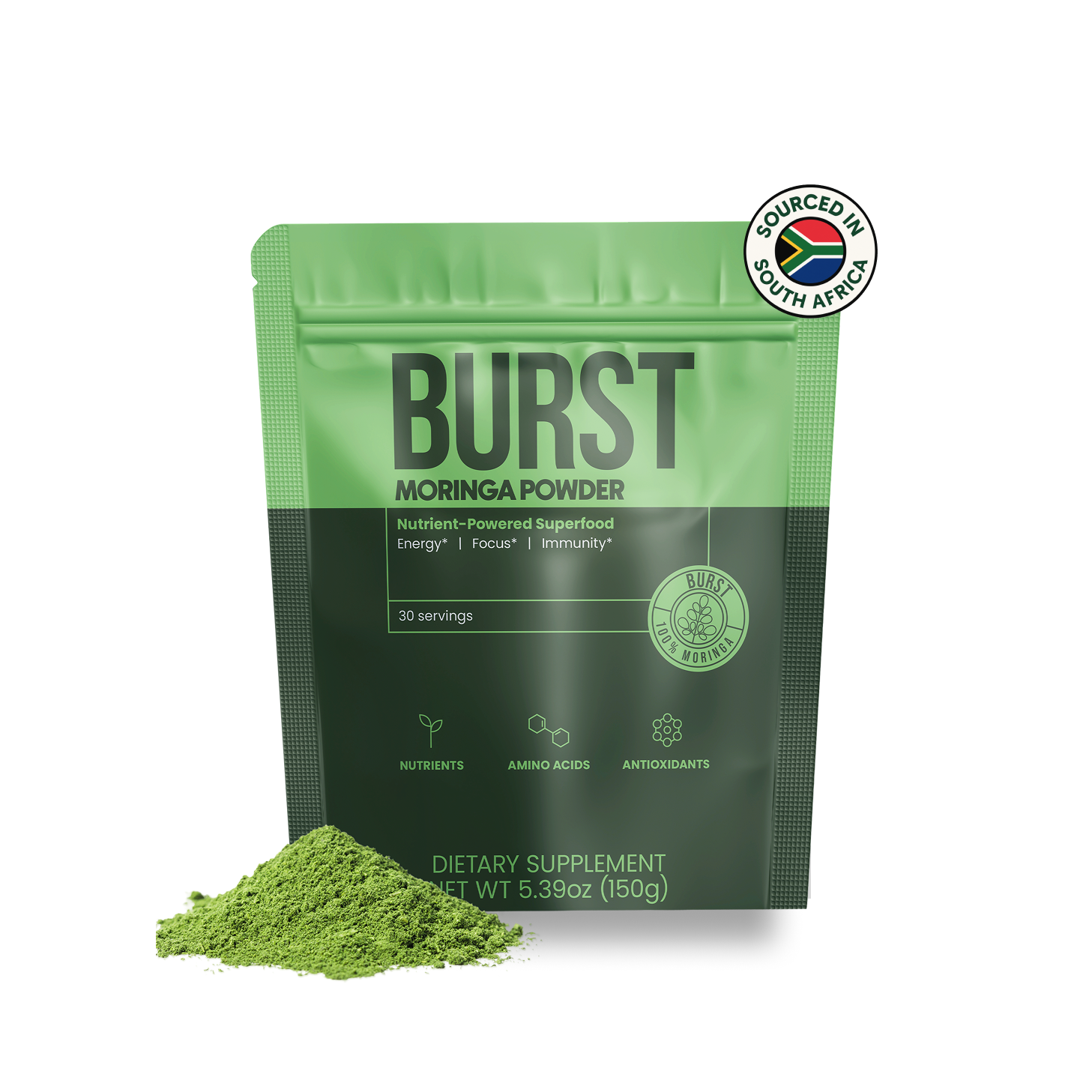
Shop Moringa Burst — Get the dose right, consistently
A high-quality source and the correct daily dose are the two factors that most influence results. Pure leaf, third-party tested, grown in nutrient-rich Southern African soil.
Shop Now →
Frequently Asked Questions
How long does moringa take to work?
Some people notice changes in energy or digestion within 7–14 days. Benefits relating to inflammation, immune support and metabolic wellness typically build over 8–12 weeks of consistent daily use.
How much moringa should I take per day?
A commonly used daily intake is 3–5g of leaf powder, or the equivalent in capsules. Many people don't see results simply because they're taking too little or using it inconsistently.
Why do people often "underdose" moringa capsules?
Many standard capsules contain small amounts per capsule, so "2 capsules daily" can add up to far less than 3–5g. The result is that people may not feel much benefit and assume moringa doesn't work.
Is powder better than capsules?
Neither is "better" — it depends on lifestyle. Powder is flexible for smoothies, water or meals; capsules are convenient and portable. What matters most is reaching the correct daily intake consistently.
Why does absorption matter with moringa?
Moringa leaf stores nutrients inside plant cell structures. If the powder doesn't disperse well during digestion, the body may not access as much of what's inside. Well-processed, high-quality moringa taken consistently helps maximise what your body can use.
Is moringa safe to take every day?
Moringa is generally well tolerated when used as directed. If you're pregnant, breastfeeding, taking medication or managing a medical condition, speak with a qualified healthcare professional before starting.
Is moringa good for you?
For most healthy adults, yes — moringa is a nutrient-dense whole food with a strong safety profile at typical doses. It isn't a cure for any condition, but as a consistent daily source of vitamins, minerals, amino acids and antioxidants, it's a well-supported addition to a general wellness routine. Anyone pregnant, breastfeeding, or managing a medical condition should check with a healthcare provider first.
Ready to Feel the Difference?
Wild-harvested, single-origin moringa — grown in nutrient-rich Southern African soil, free from fillers, and processed for maximum absorption.